What is the meaning of IHS?

featured article image

TL;DR:

: IHS is a simple abbreviation of Jesus’ name in Greek, reminding believers of His saving power and lordship. The symbol of IHS points to Christ—but has meaning only when it leads hearts to worship Him, not the symbol itself.

from the old testament

  • The Scriptures highlight the significance of a name by associating it with character and actions. For example, Israel learned to revere the Lord’s personal name, which revealed His identity and authority (Exodus 3:14). After rescuing them from Egypt, the Lord commanded them, “You shall not take the name of the LORD your God in vain, for the LORD will not hold him guiltless who takes his name in vain” (Exodus 20:7). Therefore, the meaning and importance of a name are not found in the letters themselves, but in the character of the One behind the name.
  • Tangible reminders were sometimes given to help people remember the Lord’s saving works. After crossing the Jordan, memorial stones were set up so that future generations would ask and be told how the Lord acted for them (Joshua 4:7). Tassels were used to prompt Israel to remember God’s commands and live holy lives (Numbers 15:39–40). However, at the same time, if a reminder became an idol, as with the bronze serpent, it was destroyed to protect true worship (2 Kings 18:4). So, while this allows the use of symbols, like IHS, to represent Jesus, it also serves as a warning that they should never be anything more than symbols.

from the new testament

  • In Greek, Jesus’ name, written in the English equivalent letters, is “Ihsous” (pronounced, “Ee-ay-seuss”). Notice that the first three letters are “IHS.” Therefore, that Christogram—an abbreviation of the name Jesus Christ—is simply a shorthand way of writing “Jesus.”
  • The angel told Mary that His name was to be Jesus, “for he will save his people from their sins” (Matthew 1:21b). Thus, Jesus' name represented His saving mission. John understood this, saying that he wrote the gospel of John “so that you may believe that Jesus is the Christ, the Son of God, and that by believing you may have life in his name” (John 20:31). IHS, then, is a shorthand reminder that Jesus is Savior. However, that’s all it is. The New Testament places confidence in the Lord to whom the name belongs, not in symbols that point to Him.
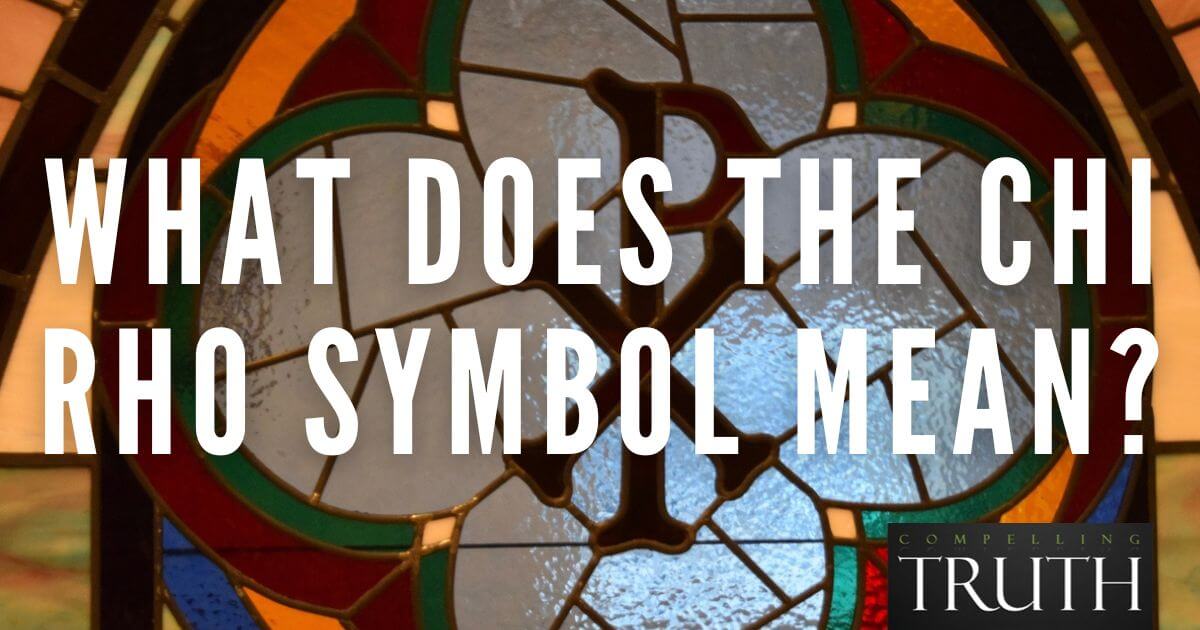
  • Throughout Christian history, believers used simple symbols to show their faith, including Christograms like IHS and XP (Chi Rho). These symbols appeared on altars, robes, windows, and even doors as public signs and private reminders.
  • Over time, different meanings were attributed to these letters as a kind of wordplay. For example, Latin phrases like Iesus Hominum Salvator (“Jesus is Savior of Mankind”) and In hoc signo vinces (“In this sign you will conquer”) were used. Similarly, English speakers sometimes say, “I have suffered” or “In His service.” In other words, IHS has been assigned various meanings to help remind someone of who they are serving or why they are fighting. Such uses can certainly help hearts remember the Lord, but caution must be exercised because IHS is simply a symbol and does not embody the full nature of who Jesus is. Paul wrote, “For I decided to know nothing among you except Jesus Christ and him crucified” (1 Corinthians 2:2). Ultimately, devotion should be placed in the person and work of Christ as described in Scripture, rather than in any feelings inspired by the use of a particular symbol.

implications for today

A symbol does not teach you about God, but it can help remind you of what the Bible teaches about Him. That means understanding what the Bible teaches is the first step in using a symbolic reminder. Once you know Scripture, then seeing IHS on a window, a book, or a gravestone can be a useful shorthand for reminding you to think about who Jesus is—the Savior who lived, died, and rose, and the Lord before whom every knee will bow. If a reminder helps you pray, confess sin, or give thanks, use it with gratitude. However, if it tempts you toward superstition, or if you begin to think of the symbol more than the Man, get rid of it. The symbol only has meaning because of the Person it points to; trust in Him.

This also encourages a practical habit: honor Jesus’ name in your words and actions. Pray in His name by seeking what pleases Him and aligns with His mission, and expect Him to work as He wills for the glory of the Father. As a believer, live in a way that reflects His name with integrity, so others see His truth and grace in you. That means symbolizing Jesus in your life by being like Him, always pointing others to the Bible and its teachings about Him!

understand

  • IHS comes from the first three Greek letters of Jesus’ name and serves as a symbol for Him.
  • The Bible emphasizes honoring the person of Jesus, not the use of symbols representing Him.
  • IHS can help remind believers of Christ’s salvation, but it must never replace genuine faith and devotion.

reflect

  • How do you use and respond to Christian symbols?
  • How can you honor Jesus’ name through your words and actions, not just symbols?
  • What helps you remember that faith rests in the living Christ, not in symbols or traditions?

engage

  • How can we use Christian symbols like IHS to point others toward Jesus, rather than superstition?
  • How might cultural or historical symbols either strengthen or weaken genuine worship?
  • How can we reflect Jesus’ name and character in practical ways beyond using symbols?