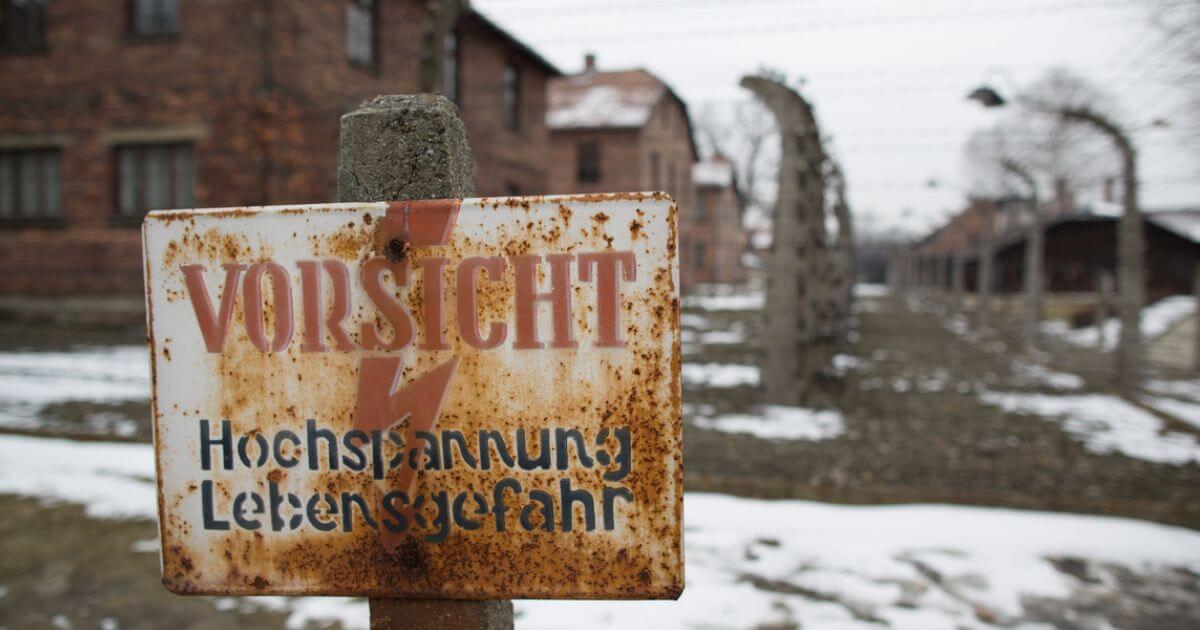
How could God allow something like the Holocaust? Why did God allow the Holocaust?

featured article image

TL;DR:

: Atrocities such as the Holocaust are the result of sinful choices made by sinful men in rebellion against a holy God. Rebellion stems from pride and a desire to be one's own master, rejecting God's rightful rule.

from the old testament

  • Sin entered the world when Adam and Eve rebelled against God (Genesis 3). While we’re under the curse of sin, evil is pervasive because Satan can and does harm people
  • The book of Job tells of Job’s intense suffering, inflicted by Satan. God allowed Satan to destroy Job’s belongings, take away his family, and suffer physical pain. God doesn’t explain why Job had to suffer, but indicates that being omniscient, He can see the whole panoply of existence, so we’re to trust in Him. Job remains faithful to God despite His suffering, and God restores his fortune, family, and health. This is a picture of the experience of believers, who can look forward to eternal life after the sufferings of this life.
  • God Himself does not cause evil. He is righteous in everything He does (Psalm 145:17). He is not at fault for evils like the Holocaust.
  • The account of Cain and Abel (Genesis 4:1-16) provides insight into rebellion and responsibility. By faith Abel offered to God a more acceptable sacrifice than Cain. Cain felt rejected and became angry. Despite God’s direct encouragement for Cain to “rule over” his sin (Genesis 4:7), Cain kills his brother (Genesis 4:8). While God allowed it, He clearly did not approve of Cain's action. This example teaches that unchecked sin leads to destruction, and that we have no right to expect God to thwart the designs of those who do evil. That, in fact, is our job.

from the new testament

  • Satan deceived Eve (2 Corinthians 11:3), causing the rebellion of Adam that brought sin (and suffering) and death into creation (Romans 5:12).
  • For believers, the Bible promises spiritual protection and eternal life (Ephesians 1:13-14), but physical protection in this temporal life is not guaranteed; in fact, Jesus told us to expect tribulation in this world (John 16:33).
  • There is no darkness in God, meaning He does not cause evil (1 John 1:5).
  • Suffering is part of this world (2 Timothy 3:12). The apostle Paul’s experiences are proof of this. In 2 Corinthians 11:23-28, he recounts the suffering he experienced, from getting whipped to being stoned to being shipwrecked and more.

implications for today

It is well-documented that a driving force of the Holocaust was social Darwinism (eugenics). The Nazi party believed that the Aryan race was superior and had the right and obligation to prevent deterioration of the superior race by mixing with inferior races, such as Slavic peoples, Jews, black people and gypsies. Further, Hitler blamed Jews for Germany's loss in World War I and for the economic chaos that followed. These twisted racist beliefs, combined with antisemitic hatred, resulted in the extermination of six million Jews. We do not fully understand the reasons why the Lord allowed His chosen people to suffer. When reason fails, we trust Christ.

It seems the world hates Jews because the world hates God, and will do anything, including the Holocaust, to eliminate Jews and their message from God. Instead, God encourages us to reject the path of wrongdoing and choose the path of justice, kindness and humility (Micah 6:8).

An indirect outcome of the Holocaust is that following World War II, sympathy toward Jews helped establish the modern State of Israel in 1948. This fulfilled biblical prophecies and provided a homeland for the Jewish people after centuries of dispersion.

As believers, what are we doing to support Israel and counter antisemitism around the world? We can overcome evil by doing good (Psalm 34:14), as Dietrich Bonhoeffer and others did during the Holocaust.

understand

  • The Holocaust was the result of human sin, rebellion, and demonic influence, not God’s will.
  • God allows human free will and does not guarantee physical protection, though He promises spiritual security.
  • Believers are called to resist evil, pursue justice, and trust in God’s ultimate plan, even in the face of incomprehensible suffering.

reflect

  • How do you respond personally when you see or hear about extreme human suffering, knowing God allows free will but does not cause evil?
  • How can you actively pursue justice, kindness, and humility in your own life as a response to the world’s injustices?
  • How does trusting in God’s ultimate plan help you process events that seem incomprehensible or unfair, like the Holocaust?

engage

  • How can we support and protect those who are targets of hatred or oppression in today’s world?
  • How can examining historical atrocities like the Holocaust deepen our understanding of human sin, free will, and God’s character?
  • How might reflecting on God’s character and promises shape how we confront evil and respond to suffering?