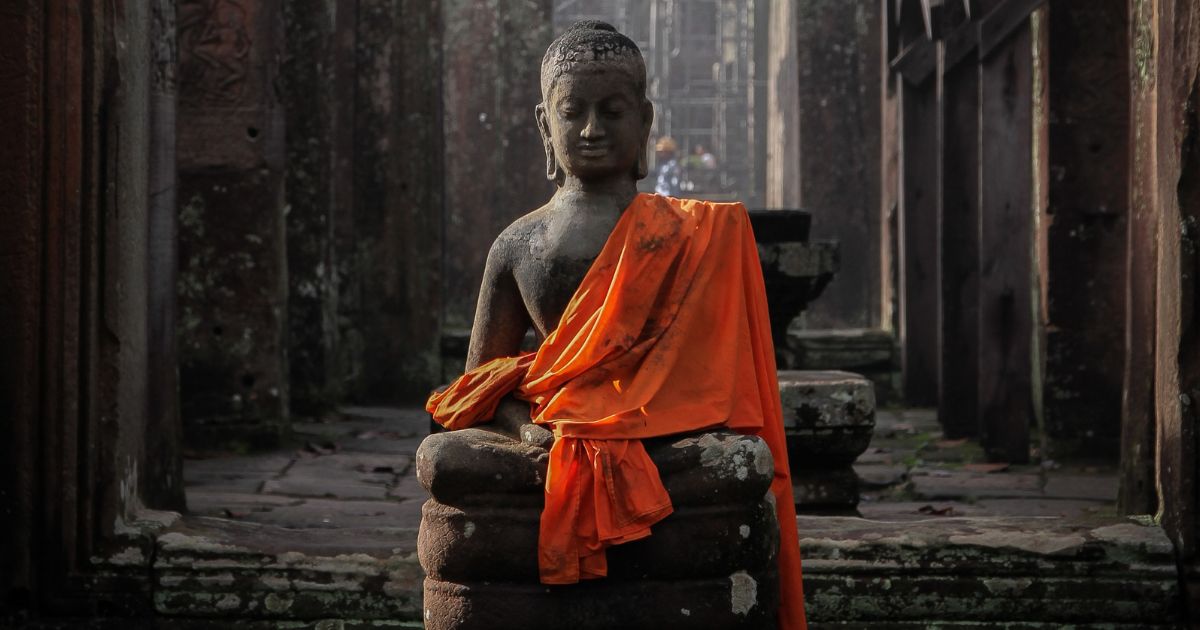
Buddhism teaches self-effort to escape suffering, but the Bible shows we cannot fix our brokenness on our own and need God’s grace. By trusting in Jesus Christ, we receive forgiveness, eternal life, and a personal relationship with God that gives us assurance beyond this life.
Buddhism emphasizes self-effort, meditation, and detachment to overcome suffering, but it offers no assurance of ultimate peace or personal connection with God. The Bible teaches that humans are inherently broken and cannot save themselves and that true peace and forgiveness come only through God’s grace. Christianity offers salvation through Jesus Christ, whose life, death, and resurrection provide a way to be restored to God (John 14:6). Unlike Buddhism, which focuses on escaping cycles of rebirth, Christianity promises a personal relationship with God that continues beyond this life. Faith in Jesus grants eternal life as a free gift, not as a reward for good deeds or personal effort. This relationship brings both purpose and meaning on earth, as well as the certainty of life after death. For a Buddhist seeking true peace, hope, and assurance, Christianity presents the transformative path that addresses the deepest needs of the human heart.
Buddhists believe the ultimate goal is nirvana, freedom from suffering, achieved through personal effort, meditation, moral living, and detachment from desires. Christianity teaches that salvation and true peace come from God, not human effort alone. Humans cannot fully fix themselves because of sin (Psalm 51:5; see Romans 3:23).
The Bible shows God as loving, personal, and relational (Psalm 145:8–9). Buddhism generally views ultimate reality as impersonal (nirvana) and doesn’t involve a personal God who desires a relationship His creation.
Humans cannot fully live righteously on their own. Jeremiah 17:9 says, “The heart is deceitful above all things, and desperately sick; who can understand it?”
Buddhism emphasizes following a path or practice to achieve enlightenment; Christianity emphasizes trusting in Christ’s work on the cross as the ultimate path to God (John 14:6).
Buddhism sees suffering as inherent to life and to be overcome through detachment and discipline. Christianity teaches that suffering stems from sin and brokenness in the world, and God offers restoration and eternal life through Jesus Christ (Romans 6:23; John 10:10).
Christianity offers a personal relationship with God that continues beyond this life (Revelation 21:3-4). Buddhism focuses on liberation from the cycle of rebirth, but lacks assurance of eternal personal connection with God.
Jesus offers a solution that human effort cannot achieve (Ephesians 2:8).
What will happen after you die? Will you reincarnate into another life form, will your spirit simply cease to exist, or is there a heaven or hell awaiting? Where can we look to find answers to our important questions about life and the afterlife? Buddhist teachings often focus on meditation and enlightenment found from within. Yet the teachings found in the Bible claim to be revelation given by the God who created you and the entire universe.
The Bible is clear: Every person dies once and then there is judgment (Hebrews 9:27).If the Bible is right, on what basis does this judgment take place? Buddhism teaches that following a path to enlightenment leads to a release of the cycle of death and rebirth. However, the Bible is clear that every person has sinned (Romans 3:23), that the penalty is death (Romans 6;23), and that our works do not save us (Ephesians 2:8-9).
The solution is not through anything we can do, but through what Christ has done. Bible offers a perfect eternity with God after this life, for those who place their faith in Jesus Christ (John 3:16). Jesus came to earth as God incarnate, lived a perfect life, died as a sacrifice for our sins, and resurrected from the dead.
Are you willing to place your faith in Jesus Christ as your Savior and receive this free gift of eternal life? You can do so right now. There is no special prayer or formula to follow. In fact, all that is required is that "you confess with your mouth that Jesus is Lord and believe in your heart that God raised him from the dead, [and] you will be saved" (Romans 10:9). If you believe in Jesus, you can confess this to Him through prayer. The following is a sample of how you might pray to accept Jesus Christ as your Savior:
Dear God, I realize I am a sinner and could never reach heaven by my own good deeds. Right now I place my faith in Jesus Christ as God's Son who died in my place rose from the dead to give me eternal life. Please forgive me of my sins and help me to live for you. Thank you for accepting me and giving me eternal life.
Have you decided to follow Christ because of what you have read here?
If so, please click on the "I have accepted Christ today" button below.
You have just made the most important decision of your life, and we'd love to support you on this journey!
How does the truth of not being able to reach nirvana through personal effort challenge your belief in personal discipline and God’s grace?
What would it mean for you to experience forgiveness and eternal life as a free gift rather than something you earn?
How does the promise of a personal relationship with God and true peace found through trusting in Jesus’ death and resurrection change the way you think about life after death?
In what ways do Buddhism and Christianity address God and human suffering differently, and what implications does that have for our spiritual needs?
What implications are there in the truth that faith and God’s grace is what brings peace instead of meditation and moral effort alone?
Why might the assurance of eternal life, peace given by God not by personal effort, and personal connection with God be compelling reasons for a Buddhist to consider Christianity?
 Facebook
 Twitter
 Pinterest
 Email
Email