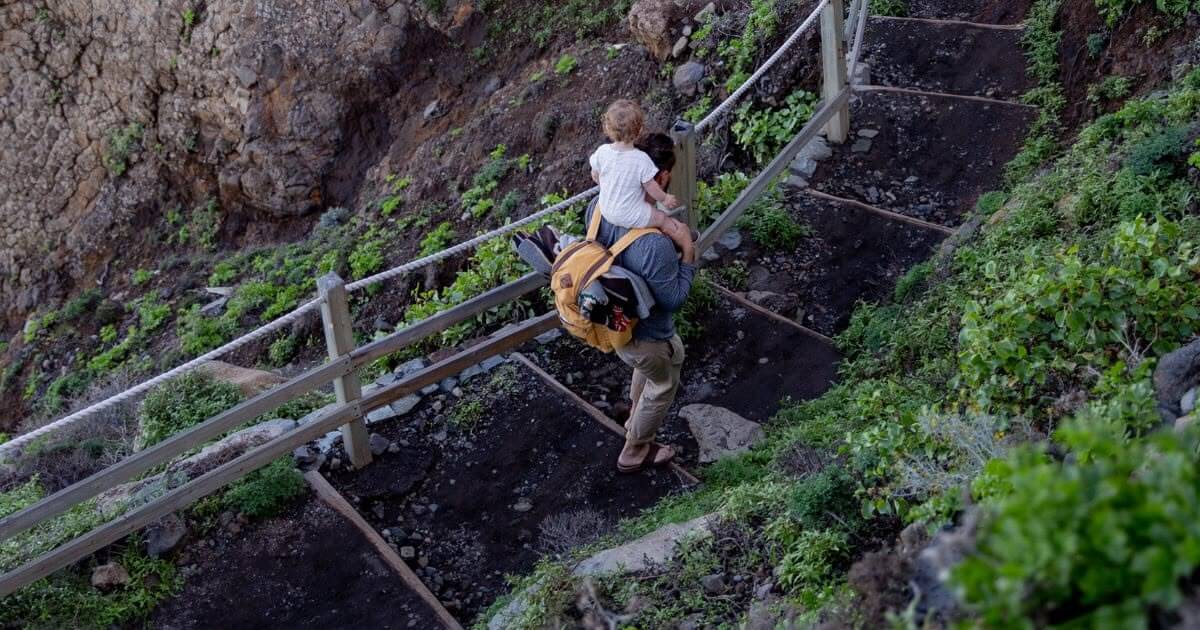
The word “chasten” – used mainly in older Bible versions – can also be translated as “discipline.” It conveys the idea of correcting a particular action through consequences and teaching. It is also used in close relationships, such as with a father disciplining a son. God chastens us when we stray or when we allow sin or the cares of the world to crowd our hearts and minds. He loves us too much to let us settle for complacency in our relationship with Him or in chasing after temporal vices that won’t satisfy. Most of the time, God may allow the natural consequences of our sin to wake us up, such as Adam in the garden (Genesis 3:7-11). Other times, He disciplines us directly for our sins, like with Moses (Numbers 27:12-14). In either case, God corrects us to make us more like Jesus.
Ultimately, chastening and discipline are not punishment. God disciplines us as children to grow us up and keep us on the straight path (Hebrews 12:5-11). Discipline only lasts for a certain length of time, so as unpleasant as it is, we must remember that punishment, in perspective, is a final judgment and lasts forever.
Christ took the punishment for our sin upon Himself on the cross. So if we are in Christ, although we will certainly receive discipline from time to time, we will never see punishment. Instead, God chastens us because He loves us and wants what is best for us.
Hebrews 12:5–6 says: "And have you forgotten the exhortation that addresses you as sons? 'My son, do not regard lightly the discipline of the Lord, nor be weary when reproved by him. For the Lord disciplines the one he loves, and chastises every son whom he receives.'" In the KJV, the word "disciplines" in verse 6 is translated as "chastens." This passage refers back to Proverbs 3:11–12. God's chastening is, at its core, His treatment of us as His children (Hebrews 12:7; see also John 1:12; Galatians 3:26).When we are being chastened, we may have feelings of conviction, experience difficult circumstances in our lives, or have decreased peace. These signs may be indicators that God is chastening us or that there is an area of life that needs to be addressed.
God is not a vindictive father punishing us for our past sins; instead, God loves us and sees the areas of danger that we ourselves cannot see. God's chastening is done as a method of purifying us and guiding us back to holiness.
We may also experience the natural consequences of our sins so that God can teach and train us in righteousness, encouraging us not to make the same mistakes. At the same time, they remind us of the grace and forgiveness that God has freely bestowed on us. While we may experience consequences for our sins, we know that they have been forgiven. When God provides correction, it is up to us to either positively respond or face whatever the natural consequences of our continued sin may be. Correction from the Lord is not easy, but we can be confident that it is for our good and it is motivated by His love for us.
 Facebook
 Twitter
 Pinterest
 Email
Email